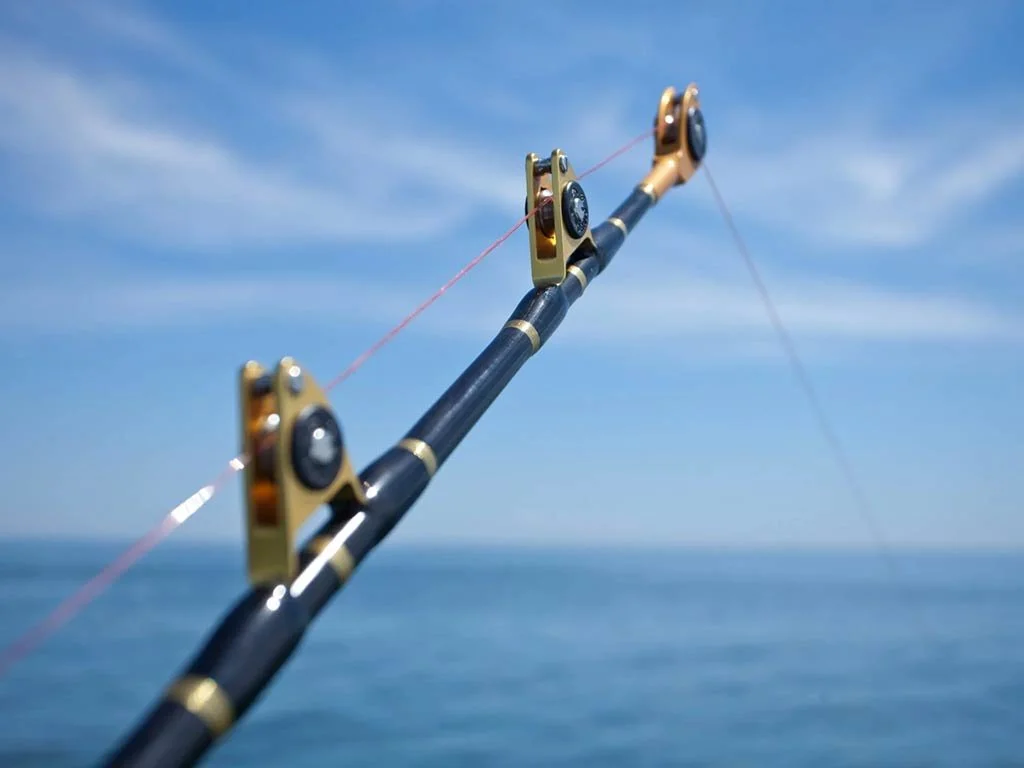
There are dozens of ways to catch fish, from shore casting and fly fishing to jigging, spear fishing, and even wrestling catfish bare-handed. But for many anglers, the most enjoyable type of fishing is deep-sea trolling.
Trolling is a deceptively simple fishing technique—it involves drawing a baited fishing line slowly through the water, to mimic the prey of a larger fish species. Live bait or lures can be used, depending on what fish is being targeted. You can troll from shore just by dragging your line through the water, or from a boat slowly pulling the line behind.
Trolling sometimes receives criticism for being “boring” or supposedly more reliant on luck than skill, but it’s a great way to spend a day on the water. Plus, when the right fish is on the hook, it can be as challenging and rewarding as any other fishing technique. Trolling is also the method behind some of the biggest record-setting catches in history. Despite the technique’s reputation for being based on luck, it takes time and skill to master.
Anglers going trolling in deep water can benefit from a few important tips for reeling in a good-sized catch. Here’s what you need to know:
Picking the Right Lures and Bait
Different fish are attracted to different bait. Marlin and swordfish pursue different prey than yellowfin tuna or wahoo—and the point of lures and bait is to convince the target fish that they are chasing their favorite prey. While you may catch other fish, you should know ahead of time what the day’s targets are, so you can choose the right bait, lures, and other gear.
There are plenty of options to choose from. Plunger lures can work well for tuna, marlin, and other big-game fish, as they make a splash that looks like a fish flopping about. Doorknob lures, often used by anglers targeting mahi mahi and sailfish, have the benefit of staying at a stable depth even in rough conditions. If you’re trolling at higher speeds, you might use a bullet head lure that slices through the water, attracting fast-swimming fish. These are just a few examples; there are many other popular trolling lures, like jet heads, dive plug lures, and chuggers. When it comes to live bait, mullet, mackerel, ballyhoo, and squid attract a variety of gamefish.
Choosing the Ideal Location
Along with bait selection, choosing the right location to troll can mean the difference between a cooler full of fish or a day without a bite. Always ask locally what fish are biting, where they are currently active, and what lures they are hitting. Location also means depth, since different fish hunt at different depths during different times of the year. Finding the right depth is an artform based on local knowledge, your own experience and instinct, and trial and error—and maybe a fishfinder.
Riggers and Other Gear
Depending on the fish you’re targeting, you’ll want to troll your lure or bait at a specific depth, rather than at the surface. Several tools can help with this.
Diving lures have bills or fins that make them sink below the surface in a way that mimics the natural movement of real baitfish. Planers are flat pieces of metal or plastic you attach to your line; the movement of the water against the planer forces your lure or bait deeper underwater. Meanwhile, a downrigger is a device that resembles a small crane with a pole and a cannonball-like weight attached to a steel cable. The fishing line is clipped to the weight, and when a fish pulls on the line, it detaches so you can reel the fish in.
A nice benefit of downriggers is that they can place several lures at different depths behind the boat. Not only does this increase your chances of catching something, but it also spreads the lines out so that they’re less likely to become tangled. Outriggers are also helpful for running multiple lines at once, though on their own, they don’t force the lures deep underwater like downriggers do.
The Right Length of Line
Many beginning anglers think that the right length of line is only about how far behind the boat the lure or bait should rest, but it also directly affects the depth at which it moves. Lots of tools, including those mentioned above, can help place your line at the right depth. But with too much or too little line, a lure’s position in the water column may be incorrect.
Be aware of the height of your pole, the depth of the lure, and how that affects the distance behind the boat. In deep water, you’ll want to troll your lure or bait about 50 to 100 feet behind your boat. If you’re fishing in very clear water, you may want to troll your line even further, to avoid the boat spooking the fish.
Trolling Speed
The goal when trolling is to make the lure or bait look as real and lifelike as possible. This means trolling at the correct speed. If you go too fast, the bait will be jumping all over the place in an unnatural way. If you go too slow, however, the bait might not seem as attractive to predatory fish.
Different target fish require different trolling speeds, just as they require different lures. There’s no steadfast rule when it comes to trolling speed, but saltwater trolling is usually most successful between 2 and 9 knots. Marlin and other billfish are fast and powerful, and typically hunt faster prey, so the 7 to 9 knot range tends to work better for them. Wahoo are even faster and can be caught at the 10+ knot range. Tuna, on the other hand, are best hunted in the 4 to 6 knot range. These are just guidelines, not rules set in stone, of course.
It’s also important to remember that fish do not always swim in a perfectly straight line. So, if you want your bait or lure to appear natural, change the direction of your boat, make zig-zag patterns, and vary your speed. Again, the goal is to convince the target fish that the lures or bait they are chasing are real. If you can make the fish believe this, you’re more likely to come home with trophies for the wall and fillets for dinner.