The Benefits and Drawbacks of Electric Fishing Boats
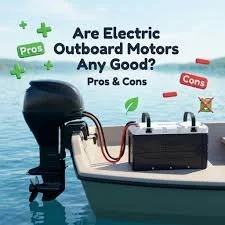
When it comes to getting out on the water for a day of fishing, a trusty boat is worth its weight in fiberglass (or aluminum), whether it’s a small skiff for back bay casting or a sportfishing yacht for deep sea trophy hunting. For most people, that means a lot of fuel—and with the current oil prices, that can make a day on the water expensive. However, there’s an alternative to gas-guzzling fishing boats, and it’s one that has become much more advanced and more popular in recent years.
Electric outboard motors have been a convenient tool for stealth fishing strikes in shallow waters for years. They are small, lightweight, and much quieter than gas motors, and they produce no noxious-smelling fumes or greenhouse gas emissions.
But are these motors the best option for all types of fishing? And what about the electric boats that are starting to pop up on the market? Here is a closer look at both the pros and cons of electric fishing boats and motors, and whether they are the future of the sport, a flash in the fish-frying pan, or something in between.
Advantages of Electric Motors
As mentioned above, electric motors can boast several advantages. One of the most significant is how quiet they are compared to loud gas-powered motors. This not only makes it easier to move in the water without scaring away the fish but also makes for a more peaceful excursion. The experience is further enhanced by the lack of fumes, exhaust, and the knowledge that electric boats are better for the environment than gas-powered ones. They do not emit the carbon monoxide, nitrogen oxides, hydrocarbons, or carbon dioxide that traditional two- and four-stroke engines generate. With an electric motor, there is also no risk of spilling fuel or oil into the water, as these motors require none.
In addition, electric boats can give you access to those lakes, reservoirs, and waterways that have outlawed gas-powered motors to preserve water quality, reduce noise pollution, or keep the water safer for swimmers and paddlers. Electric motors also allow for smoother, faster acceleration than gas motors—they generate torque instantly, allowing for better control. This can make docking and navigating narrow channels or in-water obstacles easier.
Finally, electric motors tend to be easier and cheaper to maintain than their gas-powered counterparts over the long run. They have fewer moving parts and mechanical components. This can mean less stress and less expense over the course of the engine’s lifecycle.
Disadvantages of Going Electric
Of course, electric propulsion has disadvantages. For one, electric motors tend to be more expensive than traditional gas-powered motors, particularly when you factor in spare or extra batteries. Of course, this initial investment can be offset over time by the savings in fuel costs and maintenance, but the fact that many electric setups cost double (or more) than traditional motors means that it can take a long time to break even.
Perhaps more importantly for many anglers, electric motors simply can’t compete with gas-powered powerplants when it comes to power output and range. Particularly when a large boat needs to get up on a plane for a long period of time to cover long distances, electric motors are less ideal. Even those that have the horsepower to move a large boat at high speed suffer from a limited range because it requires a huge amount of electricity to maintain these speeds. Current batteries simply aren’t up to the task of supporting sustained high-speed movement through water.
However, this disadvantage is less important when it comes to slower movement across shorter distances, as when fishing back bays, salt flats, rivers, lakes, ponds, and reservoirs. For boats that don’t need much more than 2 to 10 horsepower, electric is often ideal. But when it comes to large boats that need a lot of power, electric doesn’t quite have the oomph necessary for optimum performance—at least not yet.
Some of the Best Electric Options on the Market
When looking at the best options for electric fishing boats, it is important to differentiate between electric motors that can be mounted on several types of recreational watercraft and electric boats that have been designed for battery-powered operation.
In the first category, some of the leading electric motor manufacturers include Torqueedo, Elco, ePropulsion, and the Avator line of electric outboards from Mercury Marine. For larger units with more power, the Evoy Storm offers up to 300 hp, which is enough to get large fishing yachts up on a plane, though with lower range than a gas-powered motor.
Meanwhile, electric boat options include the line of models from X Shore, as well as Candela, Freedom Electric Marine, and Greenline. Purpose-built electric boats are less common than boats that have been converted to electric power, but they are becoming more popular.
Whether you want to retrofit your boat with an electric motor, buy a dedicated electric vessel, or stick with a conventional gas-powered motor for now, keep your eye on the electric marine propulsion industry. Battery power and range should improve in the future, and one day, electric motors may be just as common as four-stroke outboards on recreational boats.