The Distinction Between Freshwater and Saltwater Fishing Boats
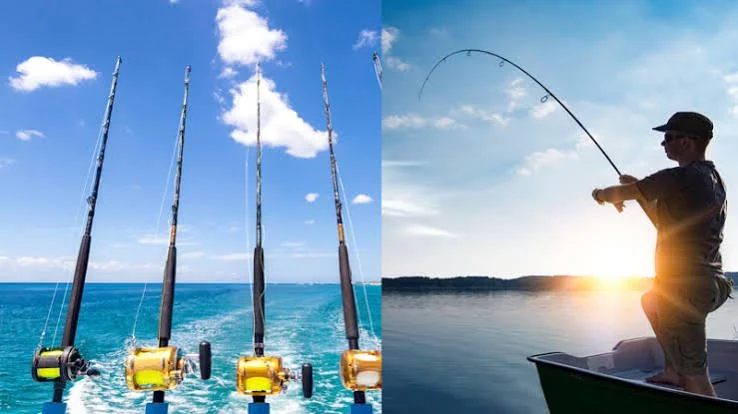
There are a lot of different ways to fish, and they are all enjoyable, but doing so from a boat might just be the sweetest. There’s something about being out on the water—alone with the elements, isolated from the hubbub on land, in command of your own watercraft—that brings a sense of escape and peace. Plus, the fishing spots that are accessible by boat are virtually unlimited; as opposed to fishing from land, which typically means either a limited number of a handful of fishing holes or long hikes or drives around meandering coastlines to other spots.
Boats provide access to offshore islands, stretches of coast without road or trail access, and fertile underwater biomes that are home to some of the largest fish that can be caught. Whether fishing in freshwater bodies (such as lakes, ponds, or rivers), brackish mangroves, back bays, intercoastal waterways, or the saltwater of the open ocean, doing it from a boat offers a unique experience. It adds an element of adventure, taking anglers out of their comfort zone and throwing them into an environment that humans aren’t naturally equipped for. All of which is to say that it can be a lot of fun!
All fishing boats have the same basic function, but there are major differences in watercraft type depending on the style of fishing, the distance being covered, and the bodies of water being fished. One of the simplest ways to categorize fishing boats is between freshwater and saltwater vessels. Although there are always exceptions to the rule, the following are the main general distinctions between these two types of boats.
Freshwater Fishing Boats
Freshwater fishing boats are largely intended for use on lakes, ponds, and rivers. Comparatively speaking, freshwater bodies are shallower with milder wave conditions than oceanwater, which makes a flat-bottomed boat with minimal draft the ideal tool. Virtually all types of freshwater fishing boats prioritize lightweight construction, ease of towing, and a stable platform. These vessels also tend to have less freeboard (the height of the boat above the waterline) and typically feature smaller engines since they are less likely to be inundated by waves and seldom need to go very far or fast. Additionally, they often have a number of features that would corrode or deteriorate quickly in saltwater, such as carpet, non-stainless steel components, and motors with open cooling systems.
Common freshwater fishing boats include aluminum boats, pontoon boats, bass boats, and Jon boats. Aluminum boats are inexpensive, lightweight, and easy to tow, while fishing pontoon boats offer better stability for casting and more storage space and room for relaxation. A relatively broad category that includes most flat-bottomed, open-deck boats, Jon boats are quick, lightweight, and perfect for shallow waters. Bass boats, meanwhile, are tailored specifically for bass fishing, the most popular freshwater fish for anglers. For this reason, they are fast and low-slung to help pull bass over the edge. They’re also designed for two-person occupancy, as competitive bass fishing typically involves teams of two.
Saltwater Fishing Boats
Saltwater fishing boats, on the other hand, tend to be bigger, sturdier, and equipped to handle the rougher waves and harsher conditions of oceanwaters. They are outfitted with stainless-steel and noncorrosive components to slow down corrosion caused by saltwater, and they typically have large engines to support long-distance fishing trips. Additionally, most have deep-V hulls that act as shock absorption to enable a smoother ride and provide added stability in rough waters.
Common types of saltwater boats include center consoles, bay boats, flats boats, and sportfishing yachts. Center consoles are among the most common saltwater vessels due to the various subcategories, all of which feature an open deck that surrounds the steering station. Bay boats are a subcategory of center consoles designed to handle choppy conditions, as well as navigate extremely shallow water. As such, their shape and structure focus on balancing durability and versatility, with some featuring semi-V hulls instead of deep-V hulls.
Flats boats are similar to bay boats in their ability to traverse shallower waters, although they’re smaller on average and specifically tailored for fishing in shallow bays, flats, and the backcountry. They have a shallower draft, a large casting deck, and a lightweight design that makes them maneuverable with a pole in extremely shallow water where the engine cannot be used.
Finally, sportfishing boats are large, powerful crafts built for long-distance, open-ocean fishing expeditions. They can be taken far offshore, have ample space for multiple people to fish and lounge, and cater to anglers targeting sportfish species. Most also come equipped with fish finders, trolling rod holders, spacious insulated fishboxes for large pelagic species, and long-distance navigational gear.
Choosing the Right Boat
The right fishing boat is a matter of personal preference and largely depends on the type of fishing, occupancy requirements, and where it is being used. Whether an angler opts for a small freshwater Jon boat or a high-tech sportfishing yacht, the important thing is enjoying your time on the water without compromising safety.